
Hindsight bias
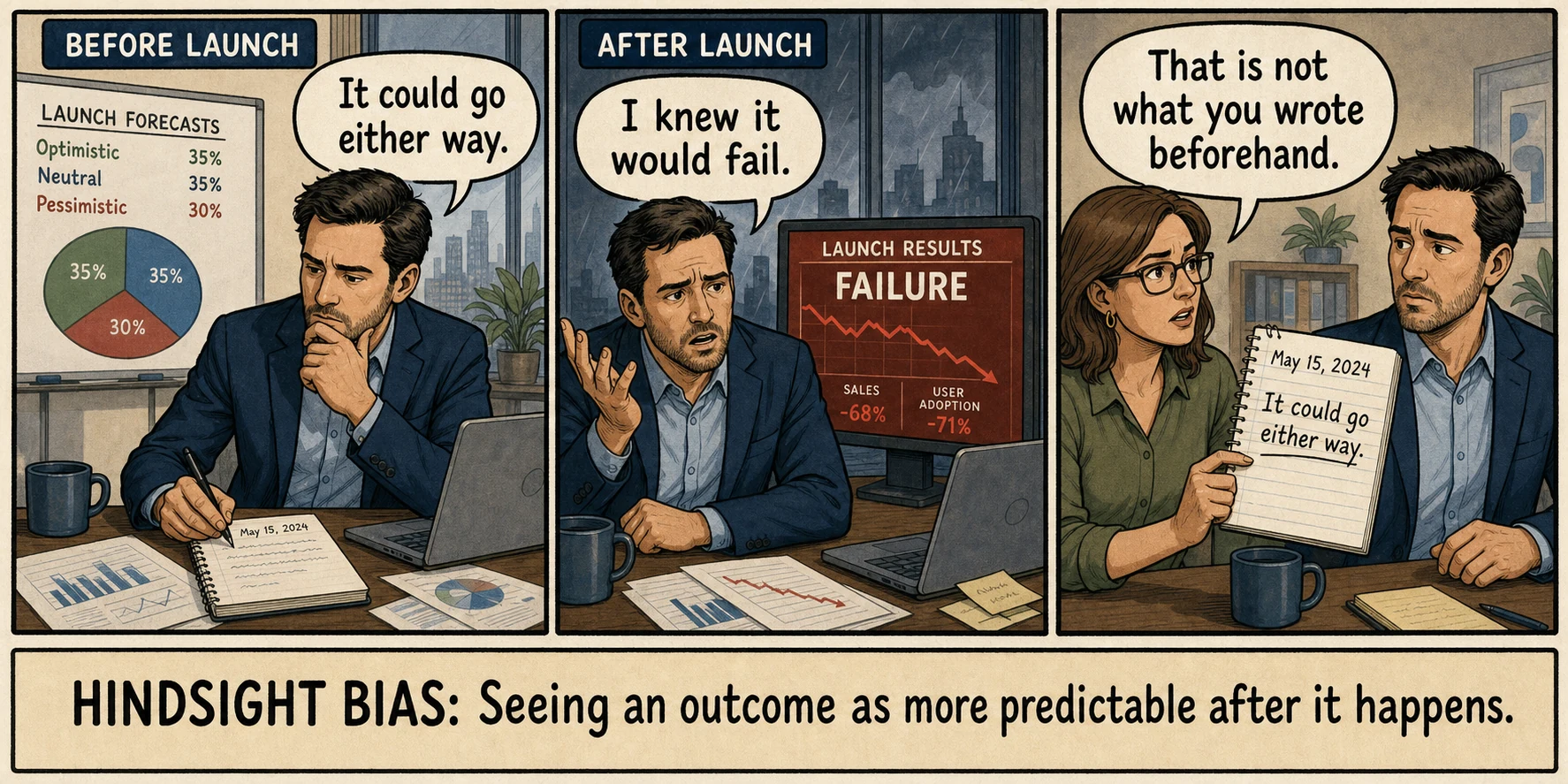
Seeing an outcome as more predictable after it happens.
What Is Hindsight bias?
Hindsight bias is a thinking trap where seeing an outcome as more predictable after it happens.
How It Tricks You
It can make a reconstructed memory feel like a clean recording.
Real-World Example
After a startup fails, everyone says the warning signs were obvious.
Examples in Daily Life
After a relationship ends, remembering every warning sign as if the ending had always been certain.
Calling a failed launch obviously flawed even though the same risks looked manageable before results arrived.
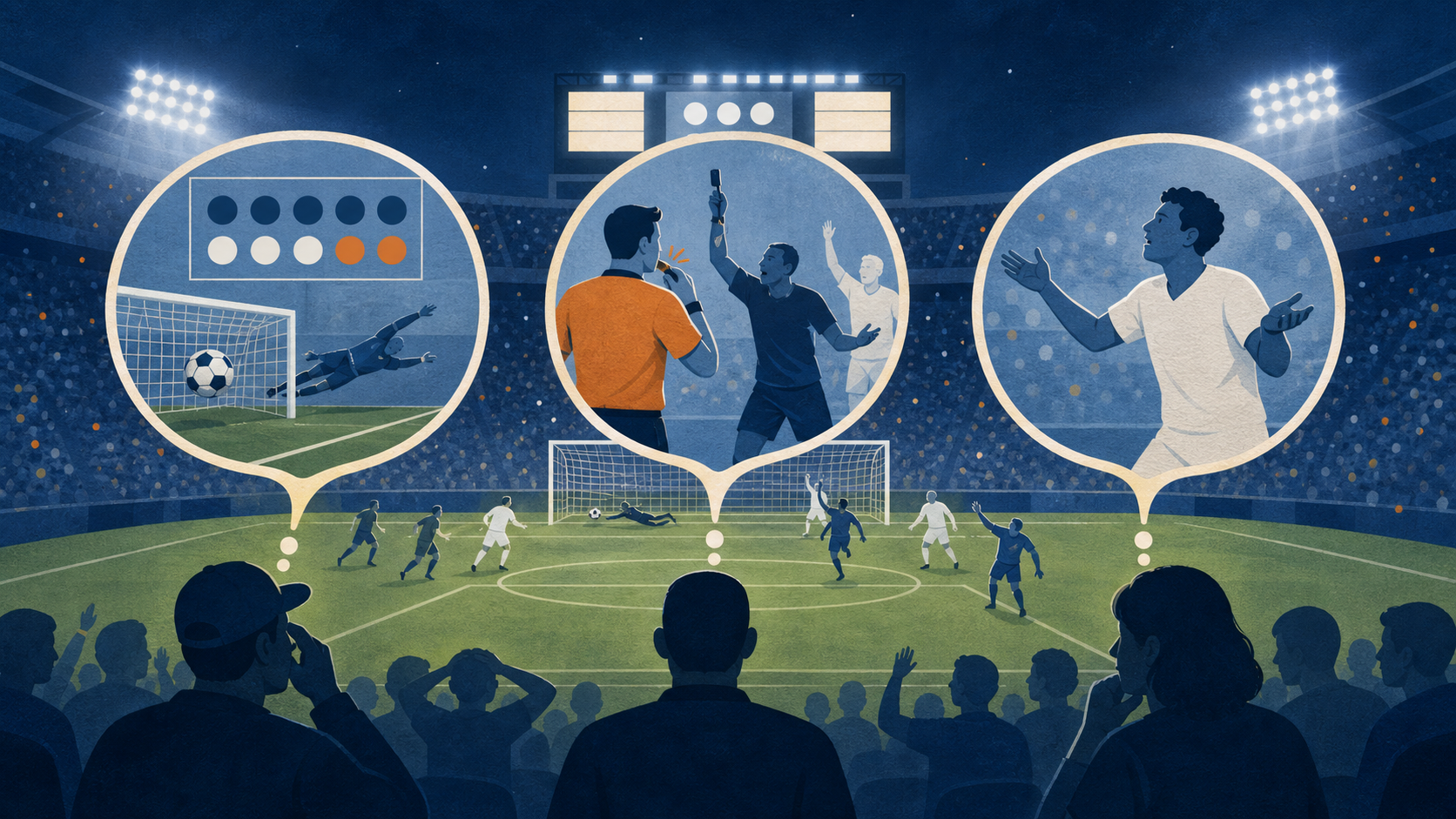
After an election, game, or market move, claiming the outcome was inevitable from clues that were ambiguous beforehand.
Seen Online As
- It was obvious from the beginning.
- I knew this would happen.
- Only after the outcome do the warning signs look crystal clear.
Hindsight bias vs. Outcome bias
Hindsight bias exaggerates how predictable an outcome was. Outcome bias judges the quality of the earlier decision primarily from how it turned out.
How To Reduce Hindsight bias
- Write down forecasts and uncertainties before the outcome.
- List plausible alternatives that existed at the decision point.
- Judge what was knowable then, not what became obvious later.
What To Ask Instead
What was actually knowable beforehand?
Related Thinking Traps
Common Situations
Related Reading


Evidence and context
Research Basis
Reviewed August 25, 2026
Robust judgment effect; outcome knowledge can alter remembered predictions and perceived inevitability.
- Hindsight is not equal to foresight: The effect of outcome knowledge on judgment under uncertaintyB. Fischhoff · Journal of Experimental Psychology: Human Perception and Performance · 1975
- Hindsight BiasN. J. Roese and K. D. Vohs · Perspectives on Psychological Science · 2012
Sources establish the research basis for this guide. The examples and check questions are plain-language applications by Thinking Traps.
Quick FAQ
What is Hindsight bias?
Seeing an outcome as more predictable after it happens.
What is an example of Hindsight bias?
After a startup fails, everyone says the warning signs were obvious.
How do I spot Hindsight bias?
What was actually knowable beforehand?
How can I reduce Hindsight bias?
Write down forecasts and uncertainties before the outcome. List plausible alternatives that existed at the decision point. Judge what was knowable then, not what became obvious later.