
Fluency Illusion
When easy to read feels easy to know.
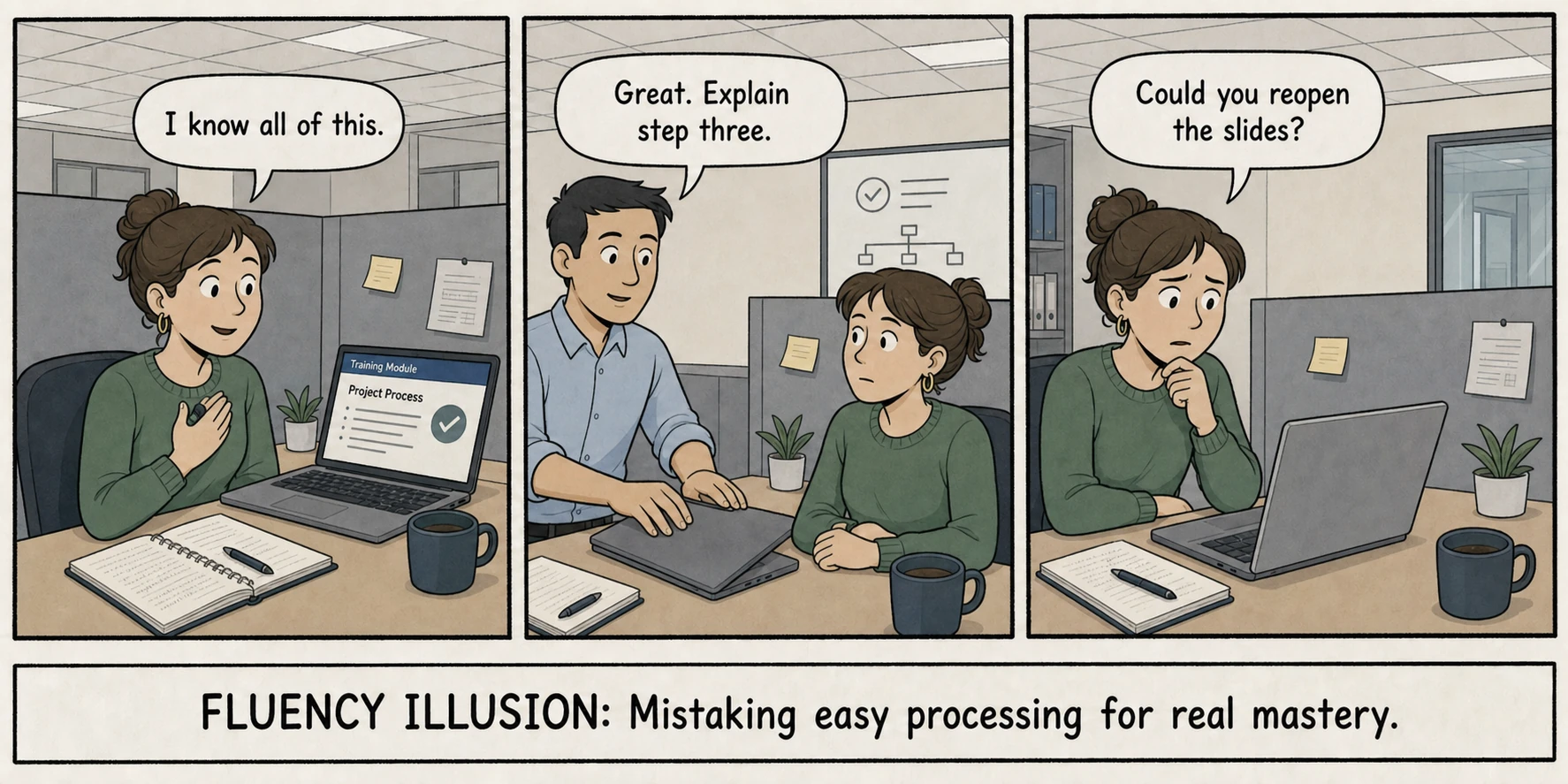
The fluency illusion appears when information feels so smooth and familiar that we mistake recognition for understanding. Rereading a clear explanation can create confidence without creating recall. The real test is not whether the material looks familiar, but whether you can explain or use it without looking.
Mistaking easy processing for real mastery.
What Is Fluency illusion?
Fluency illusion is a thinking trap where mistaking easy processing for real mastery.
How It Tricks You
It can make confidence, effort, or feedback feel like learning before understanding has been tested.
Real-World Example
A video lesson feels easy, so the viewer assumes they mastered the skill.
Examples in Daily Life
Rereading instructions until they feel familiar, then discovering you cannot complete the task without looking back.
Leaving a polished training session confident but being unable to perform the procedure independently a week later.
Mistaking a clear explainer video or fluent AI answer for knowledge you can recall, test, and apply yourself.
Seen Online As
- The explanation was smooth, so I must understand it.
- It felt easy to follow, so I assume I can explain it.
- Easy reading is standing in for real recall.
Fluency illusion vs. Familiarity heuristic
The familiarity heuristic favors options that feel known or recognizable. The fluency illusion specifically mistakes ease of processing or review for durable learning and understanding.
How To Reduce Fluency illusion
- Close the material and explain it from memory.
- Test the skill in a new example rather than repeating the demonstration.
- Space practice across time so familiarity cannot impersonate retention.
What To Ask Instead
Can I recall it later under pressure?
Related Thinking Traps
Common Situations
Related Reading





Evidence and context
Research Basis
Reviewed August 25, 2026
Supported metacognitive learning effect; easy processing can increase confidence without ensuring later retrieval.
- Illusions of competence during study can be remedied by manipulations that enhance learners' sensitivity to retrieval conditions at testA. Koriat and R. A. Bjork · Journal of Experimental Psychology: Learning, Memory, and Cognition · 2005
- Uniting the Tribes of Fluency to Form a Metacognitive NationA. L. Alter and D. M. Oppenheimer · Personality and Social Psychology Review · 2009
Sources establish the research basis for this guide. The examples and check questions are plain-language applications by Thinking Traps.
Quick FAQ
What is Fluency illusion?
Mistaking easy processing for real mastery.
What is an example of Fluency illusion?
A video lesson feels easy, so the viewer assumes they mastered the skill.
How do I spot Fluency illusion?
Can I recall it later under pressure?
How can I reduce Fluency illusion?
Close the material and explain it from memory. Test the skill in a new example rather than repeating the demonstration. Space practice across time so familiarity cannot impersonate retention.