
Survivorship bias
Learning only from visible successes.
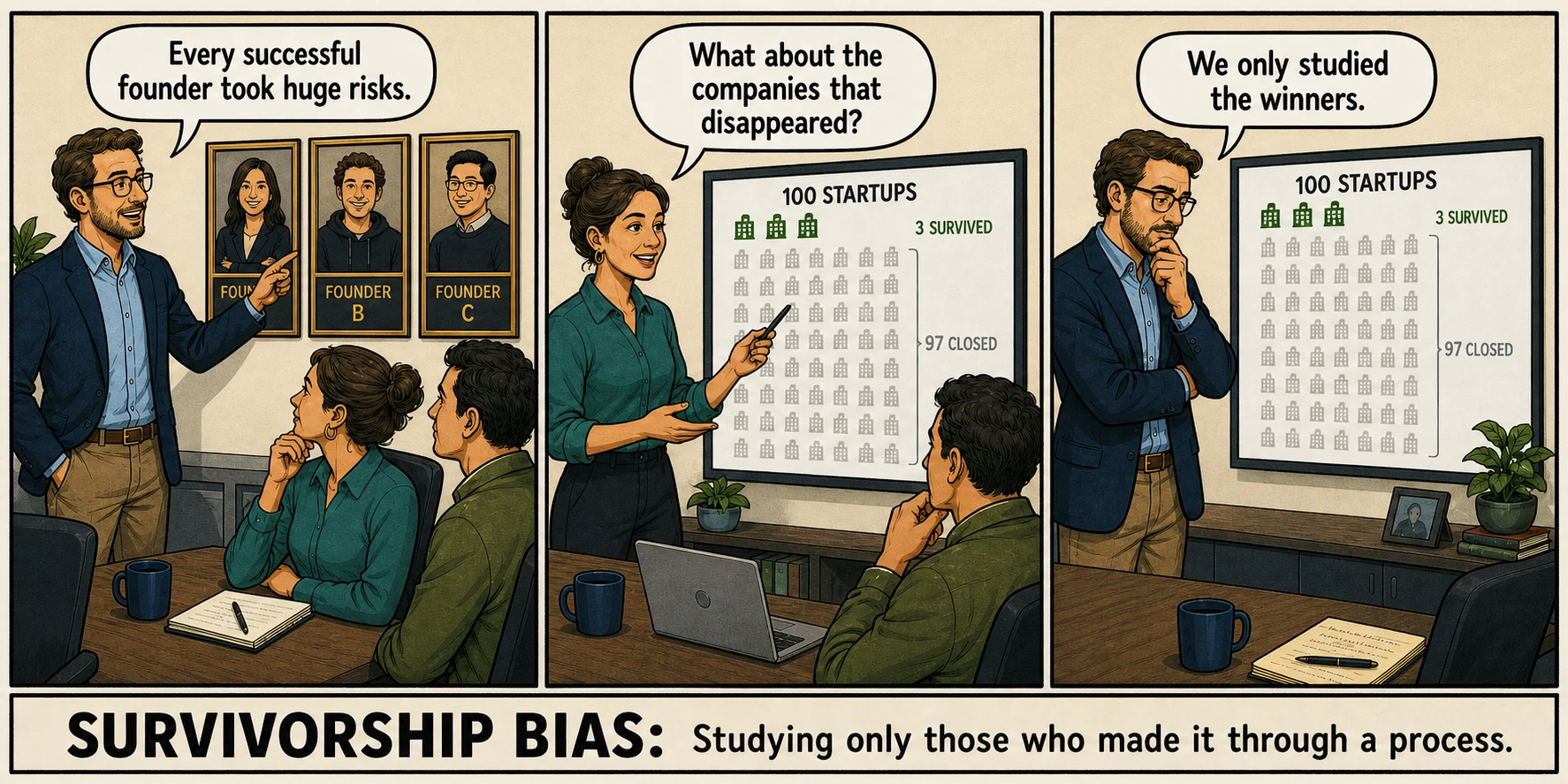
What Is Survivorship bias?
Survivorship bias is a thinking trap where learning only from visible successes.
How It Tricks You
It can make one option feel obvious before the tradeoffs have been checked.
Real-World Example
Entrepreneur advice comes only from founders whose companies survived.
Examples in Daily Life
Copying the habits of a successful person without seeing how many people used the same habits and did not succeed.
Studying only completed projects to define best practices while ignoring projects canceled before launch.
Taking business advice from visible winners without counting failed accounts, companies, or strategies that left no audience.
Seen Online As
- They succeeded this way, so this must be the path.
- I am studying the winners and ignoring everyone who tried and failed.
- The visible success stories are hiding the missing failures.
Survivorship bias vs. Selection bias
Selection bias covers distorted inclusion in a sample. Survivorship bias is the specific mistake of examining the cases that remained visible after a process while missing those that failed or disappeared.
How To Reduce Survivorship bias
- Identify what had to survive to become visible.
- Look for failures, dropouts, closures, and abandoned attempts.
- Compare the traits of winners with the starting population, not only with other winners.
What To Ask Instead
Who failed or disappeared from the sample?
Related Thinking Traps
Common Situations
Related Reading



Quick FAQ
What is Survivorship bias?
Learning only from visible successes.
What is an example of Survivorship bias?
Entrepreneur advice comes only from founders whose companies survived.
How do I spot Survivorship bias?
Who failed or disappeared from the sample?
How can I reduce Survivorship bias?
Identify what had to survive to become visible. Look for failures, dropouts, closures, and abandoned attempts. Compare the traits of winners with the starting population, not only with other winners.